The purest words. Ever

It was the richest, most avant-garde, secular country of the entire Middle East. One of the smallest nations of the world held the hearts of people from the region and beyond. Its cosmopolitan heyday lasted roughly from the mid-50s to 1975.

It was the emblem of liberalism, of how – at least on the surface – differences can unite a coexisting variegated population: Muslims Sunni and Muslim Shi’ite, Christians.
All together in that tiny land of mountains and Mediterranean Sea, that handkerchief on planet earth that was so unique it allowed you to go skiing in the morning and swimming in the afternoon. Everything seemed easy, reachable and possible in Lebanon, starting from happiness.

On the surface, it mattered little if it was France, the colonizing power up to 1943, who drew Lebanon’s borders, if starting from then the country was ruled by a sectarian elite, if factions of self-interest always prevailed ahead of state and nation and if the idea of a nation was still embryonic.

The intentions were good: at the founding of Lebanon, under the National Pact, it was agreed the President had to be a Christian Maronite, the Prime Minister a Sunni, the Speaker of Parliament a Shi’ite Muslim. The quota of democracy.

In 1952 Lebanese women gained the right to vote and, the year after, Parliament drafted one of the first anti-corruption laws of its kind. Lebanon was ahead.

Tourism boomed, both from the Arab World and from afar. The jet-set had chosen Beirut to holiday and be seen, jet-ski and indulge.
Brigitte Bardot, Peter O’ Toole, ElizabethTaylor and Richard Burton, Omar Shariff, King Farouk of Egypt were habitués of the iconic St. George’s Hotel; Casino du Liban hosted Miss Europe beauty pageant (1964) and was the stage where Duke Ellington and Jacques Brel performed.
Postcards from Lebanon made everyone dream.

Middle Eastern companies were transferring their headquarters to Lebanon, Beirut was the financial and trade centre of the entire region, its harbor known for hosting cruise liners (see the Queen Elizabeth II) while the American University was the debating society of the new thinkers.

That Mediterranean appeal with the Near Orient flare were the perfect alchemy. Yet, it was glamorous, but there was no national unity, still.

It was affluent, but not for everyone: poverty, out of Beirut, was spread. It was fashionable and avant-garde, but beneath the surface discontent was palpable, deriving from sectarian politics.

Lebanon – like no other country in the world – was continuing to bear the shockwave of the creation of the State of Israel (1948) which had sent 100,000 Palestinian refugees over the border.

It was a foretold catastrophe and it started in 1975.

The war, a prolonged agony, lasted up to 1990. Over fifteen years of numerous internal and external contenders, alliances and frequent reversals of alliances, of massacres. Endless. It became one of the most difficult conflicts to report and analyze, fought from building to building, door to door, window to window, breath to breath. It was the war of the neighbourhoods, streets, barricades and barrage of atrocities and explosive devices. It was the war that generated subconflicts, claimed the life of at least 120,000 people and swallowed 17,000 through forced disappearances.

It was chaos, with Syria dreaming to place Lebanon under the project of a ‘Greater Syria’ and Israel intending to oppose the PLO (Palestinian Liberation Front) militiamen creating a security zone under their control.

At the root, though, it was pain. Immeasurable pain, still felt today.

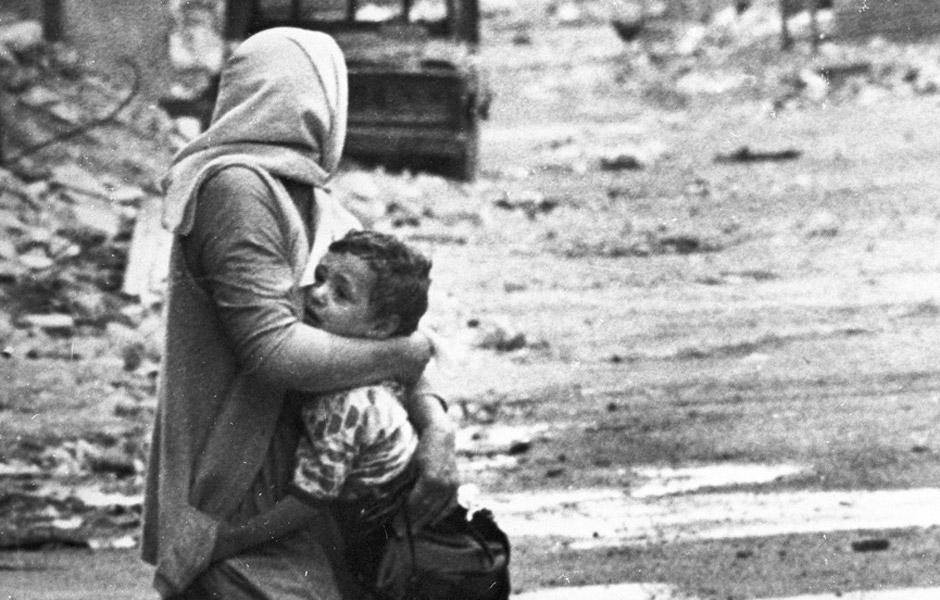
One night, I happened to watch some footage from the War of the Camps, a sub-conflict within the 1984–89 phase of the Lebanese civil war in which Palestinian refugee camps were besieged.
Of all the horror I swallowed, I could not refrain hiccups and tears when the images moved to a wounded child, on a ‘hospital’ bed.
There was nothing human in that scene.
A grown up was telling the young boy to be strong and resist.
The child asked how could he resist and the grownup replied “Pray, pray to God”
And so the boy did.
Laying in his trauma, his tattered bloodied clothes, the boy uttered:
“Dear God, protect my father. Dear God, protect my mother”.

Amid an ocean of obscenities, a tiny clean island.
Amid soul-corrupting hate and inhumanity, a quiet utterance of human soul.
This is surely a purity that should make all hearts, human and godly, weep.
The machines of hate are never silenced.
But one candle then, and many like it now, flicker their fragile human light against the blackest of blacks.
We can only trust and hope, that hope is never lost.

photo: A Palestinian refugee and her child caught in sniper fire during the War of Camps. Author: unknown

Free samples

In this summer of no peace and abominable news, there’s one from Italy that has alienated me from the human race.
In short: in a video (unfortunately authentic), two women in white scrubs and later identified as a doctor – a GP- and a nurse, are seen showing boxes of a drug from an Israeli company, TEVA, crossing out the brand name, and then throwing the packages in the trash.
When the Local Health Authority forced the two women to publicly apologize, they stated: “We didn’t throw away real drugs; they were free samples, wipes, and a sodium and potassium supplement. After symbolically scribbling them down, we put them back.”

When I moved to Sanaa, during my first year, I spent my evenings at my boss’s pharmacy. It was a way to understand what was around me, learn Arabic and have a wider view on Yemen.
Attached to the pharmacy was what they called “the clinic,” nothing more than a battered room where first aid was provided, injections were administered, and a bit of everything was treated: malaria, dysentery, high fevers, bruises, cuts, swollen joints. Wounds were cleaned. Sometimes, for free. Often for free.

On the main counter of the pharmacy was a string with a pair of scissors attached. They were used to cut medicine blister packs because, basically, people could afford ONE aspirin, ONE Panadol, ONE ibuprofen, ONE suppository.

In some countries, there are no free samples; there are no wipes, sodium, and potassium supplements that can make a huge difference in a person’s life.
If we want to protest, we should always consider the greater good and how our protest fits the wider picture. I am afraid that throwing away – or pretending to – free samples lacks any sense and definitely will not help the Palestinian people. It might actually offend them. But also the Yemeni and all those people who are dealing with bombs, wars, lack of outlooks, people who sit in refugee camps with no clean water and no tomorrow.
All those whose lives have only received constant free samples of misery.

Incendies: relevant as ever

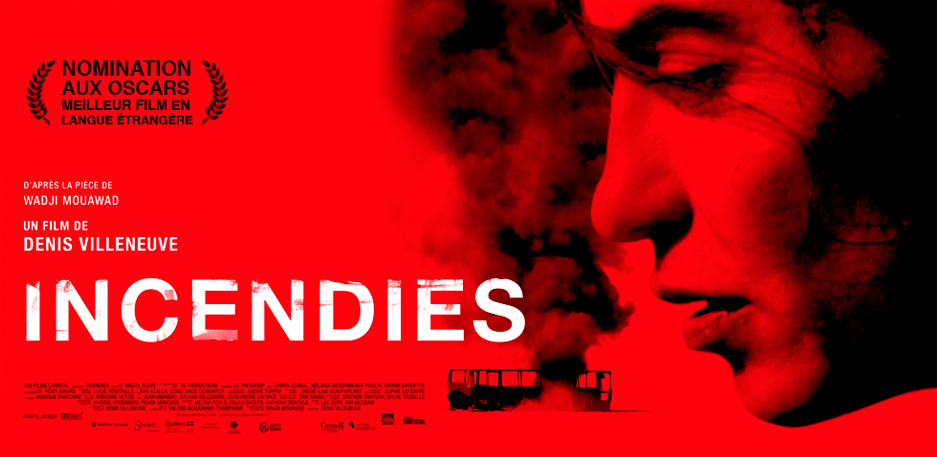
INCENDIES is a punch in the heart. It petrifies you as it speaks the language of any given war with the addendum, that additional element, that it is a sectarian war which turns into your blood system as a reminiscence of the Lebanese civil war (1975-1990, 150.000 lives lost).

It is one of the strongest films I have ever watched.

Simon and Jeanne are twins of Arab origin living in Canada where they must visit a notary to hear their mother’s will.
Out of the blue, they discover they have a brother and that their father is still alive.
To put things in order, deal with their mother’s last wishes and continue with their life, they have to travel to an unnamed Middle Eastern country that is recovering from years of sectarian war.
While painfully discovering their mother’s past, their future will never be the same.

Adapted from Wajdi Mouawad’s 2003 play (Mouawad fled Lebanon when he was eight), Incendies overflows with atrocities, yet it leaves an indelible impression as no one plays the victim: wars happen and we all act accordingly, whether with moral nobility or imbued with wickedness.

Directed by Denis Villeneuve – Canada, France, 2010, the film convinced me to say, again, that I highly dedicate the narrative to all those who dream of revolutions and of a fictionary ‘last war that will restore stability and world order’. Buffoons.

Afghanistan, Beyond the Battles

Mujahideen, the Taliban, North American invasion of 2001, the struggle for democracy (whose democracy? Which democracy?), through the eyes, scars on skin and words of the actors on the ground.

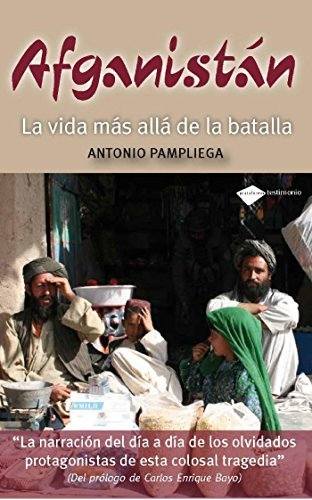
Antonio Pampliega‘s book Afganistan Mas Allá de La Batalla (Testimonio) had the intent to humanize the inhumanity of war and, specifically, the endless state of wars in Afghanistan, a country so torn that newsrooms can no longer handle truth.
Nobody cares any longer.

Nobody cared and cares of Sayid, barely four months old who died quietly, in a hospital bed where there are no medicines, where machinery donated by NGOs could not benefit from maintenance or the luxury of top-notch spare parts.
Nobody wants to care.
Nobody has the time to notice.
Sayid was a victim of statistics, they say. Just one more number in a long list that measures in decades.
In 2010, when the book was written, of every ten children born, more than half died before reaching the age of five.
We know it did not get any better. Perhaps never, in our lifetime.

I think of Pampliega’s encounter with the people involved in the renaissance of a bookstore, a cinema, a team of girls playing football, a tireless NGO, the victims turnt into angels of prosthetics and rehabilitation in a hospital and all those hopes and dreams of a dignified life.

I bow to his tribute to the figure of fixers, especially his fixer in Afghanistan, without whose help this book would have never been possible and without whose dedication most of the articles and correspondences around the world would never come to life. If we know anything about a difficult country, we owe it to fixers, not governments.

The people who become heroic in Pampliega’s Testimonio are ordinary people who simply try to do the right thing.
Who choose to stay human and be their better selves whatever context they navigate.

The book made me think of someone I knew, a young Afghan called Mansoor.
People like Mansoor made sense of this world.
He believed in education, he believed in egalitarianism in its purest sense.
He loved children.
When he started working for Save the Children, he followed a special and essential project: bringing clean and safe water to remote villages of Uruzgan province, Afghanistan.
His actions meant everything to so many.
In 2015, Mansoor – just 25 – was kidnapped with four colleagues.
After a month of negotiations, the captors decided to proceed with the slaughter of the five young men.
Along with Mansoor, the captors took the life of Rafiullah Salihzai, 27, Naqibullah Afkar, 29, Mohammad Haroon, 27 and Mohammad Naeem, 24.
All but Mansoor were married and, together, they left 12 children behind.
Mansoor is gone, his killers most likely are still alive.
Antonio Pampliega would have loved him.

They say that when Allah made the rest of the world, He saw that there was left a heap of rubbish, fragments, pieces and remains that did not fit anywhere else. After gathering them, he threw them into the ground and thus created Afghanistan.
Make some sense of it

The scarf

My beloved,
should someone ever hand you this envelope, do not lose balance.
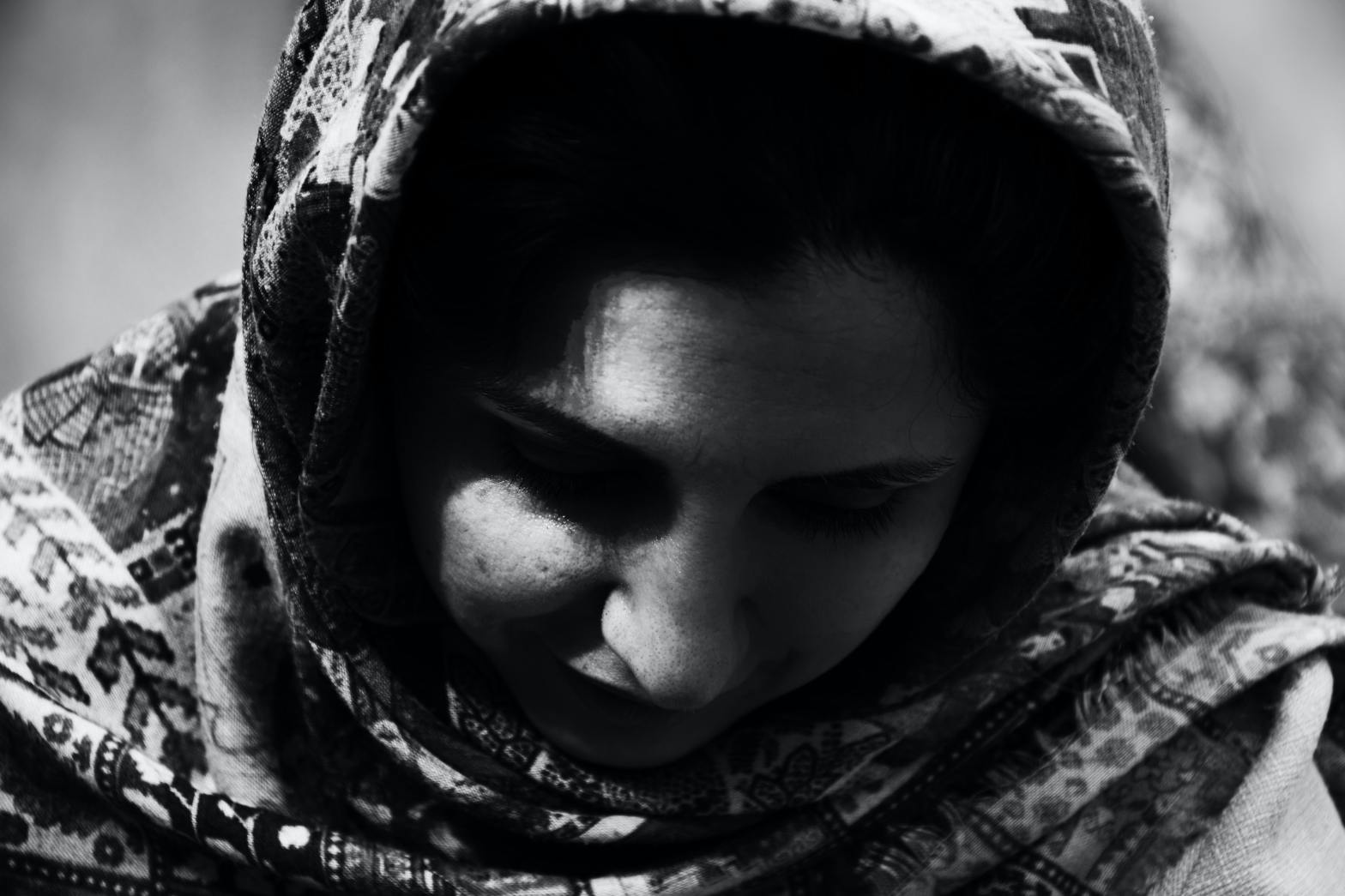
I am leaving you my only possession, a scarf.
When you touch it, you will feel the caress of southern winds and calls to the prayer.

This scarf has been hugged by strong women, protected at times my shoulders, always a rebellious turf unwilling to comply.
It caressed ancient buildings while running for safety, it jumped on public transportation and came shopping, to work when we had one.
It has been washed every day and dried overnight, even in January, of all the months, the coldest.

It dried some tears, often not mine, and hid unwashed hair when we had no more water.It was a layer under deluges on which I always sprayed our favourite perfume; a way to brave the day together.

Should someone ever hand you this envelope, remember there is only one layer between you and me, now. The layer of time when you will join me, for eternity is ours.

I hope you felt my love in life.
Yours, forever, Z. 


The scarf now rests in H’s laboratory, in a cupboard with his finest leathers, locked.
The scents of leather, a mixture of birch, sweetness and earth combined with vanilla, Arabic oud, moss and rain.

The Southern winds the scarf captured now years back, fill the room with the perfume of two lovers.
Every morning.
H. looks outside and the sky displays clouds chasing different shapes.
He hears her voice: It is not ordinary at all to have a love to come home to

photo credit