The purest words. Ever

It was the richest, most avant-garde, secular country of the entire Middle East. One of the smallest nations of the world held the hearts of people from the region and beyond. Its cosmopolitan heyday lasted roughly from the mid-50s to 1975.

It was the emblem of liberalism, of how – at least on the surface – differences can unite a coexisting variegated population: Muslims Sunni and Muslim Shi’ite, Christians.
All together in that tiny land of mountains and Mediterranean Sea, that handkerchief on planet earth that was so unique it allowed you to go skiing in the morning and swimming in the afternoon. Everything seemed easy, reachable and possible in Lebanon, starting from happiness.

On the surface, it mattered little if it was France, the colonizing power up to 1943, who drew Lebanon’s borders, if starting from then the country was ruled by a sectarian elite, if factions of self-interest always prevailed ahead of state and nation and if the idea of a nation was still embryonic.

The intentions were good: at the founding of Lebanon, under the National Pact, it was agreed the President had to be a Christian Maronite, the Prime Minister a Sunni, the Speaker of Parliament a Shi’ite Muslim. The quota of democracy.

In 1952 Lebanese women gained the right to vote and, the year after, Parliament drafted one of the first anti-corruption laws of its kind. Lebanon was ahead.

Tourism boomed, both from the Arab World and from afar. The jet-set had chosen Beirut to holiday and be seen, jet-ski and indulge.
Brigitte Bardot, Peter O’ Toole, ElizabethTaylor and Richard Burton, Omar Shariff, King Farouk of Egypt were habitués of the iconic St. George’s Hotel; Casino du Liban hosted Miss Europe beauty pageant (1964) and was the stage where Duke Ellington and Jacques Brel performed.
Postcards from Lebanon made everyone dream.

Middle Eastern companies were transferring their headquarters to Lebanon, Beirut was the financial and trade centre of the entire region, its harbor known for hosting cruise liners (see the Queen Elizabeth II) while the American University was the debating society of the new thinkers.

That Mediterranean appeal with the Near Orient flare were the perfect alchemy. Yet, it was glamorous, but there was no national unity, still.

It was affluent, but not for everyone: poverty, out of Beirut, was spread. It was fashionable and avant-garde, but beneath the surface discontent was palpable, deriving from sectarian politics.

Lebanon – like no other country in the world – was continuing to bear the shockwave of the creation of the State of Israel (1948) which had sent 100,000 Palestinian refugees over the border.

It was a foretold catastrophe and it started in 1975.

The war, a prolonged agony, lasted up to 1990. Over fifteen years of numerous internal and external contenders, alliances and frequent reversals of alliances, of massacres. Endless. It became one of the most difficult conflicts to report and analyze, fought from building to building, door to door, window to window, breath to breath. It was the war of the neighbourhoods, streets, barricades and barrage of atrocities and explosive devices. It was the war that generated subconflicts, claimed the life of at least 120,000 people and swallowed 17,000 through forced disappearances.

It was chaos, with Syria dreaming to place Lebanon under the project of a ‘Greater Syria’ and Israel intending to oppose the PLO (Palestinian Liberation Front) militiamen creating a security zone under their control.

At the root, though, it was pain. Immeasurable pain, still felt today.

One night, I happened to watch some footage from the War of the Camps, a sub-conflict within the 1984–89 phase of the Lebanese civil war in which Palestinian refugee camps were besieged.
Of all the horror I swallowed, I could not refrain hiccups and tears when the images moved to a wounded child, on a ‘hospital’ bed.
There was nothing human in that scene.
A grown up was telling the young boy to be strong and resist.
The child asked how could he resist and the grownup replied “Pray, pray to God”
And so the boy did.
Laying in his trauma, his tattered bloodied clothes, the boy uttered:
“Dear God, protect my father. Dear God, protect my mother”.

Amid an ocean of obscenities, a tiny clean island.
Amid soul-corrupting hate and inhumanity, a quiet utterance of human soul.
This is surely a purity that should make all hearts, human and godly, weep.
The machines of hate are never silenced.
But one candle then, and many like it now, flicker their fragile human light against the blackest of blacks.
We can only trust and hope, that hope is never lost.

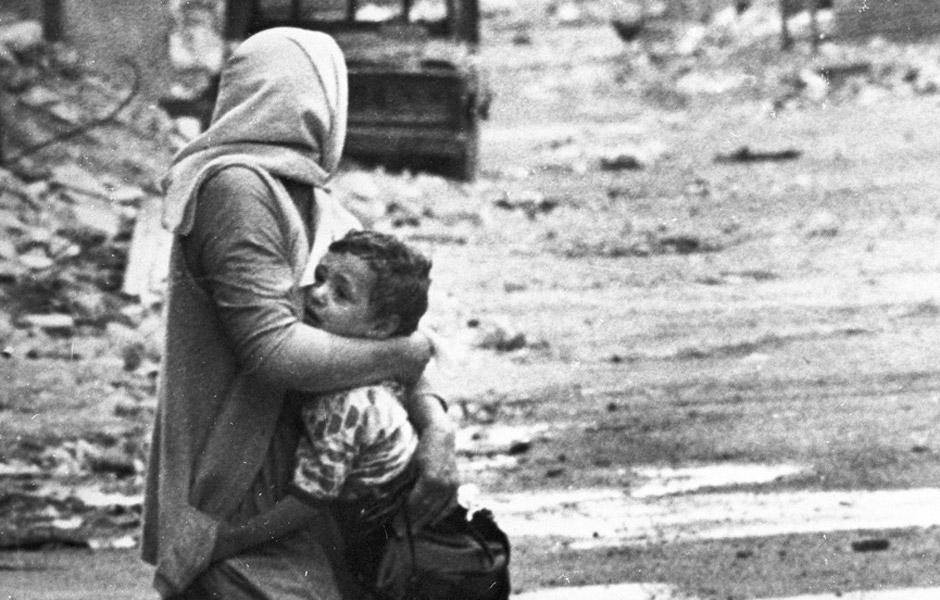
photo: A Palestinian refugee and her child caught in sniper fire during the War of Camps. Author: unknown

Notturno, the evanescence of borders

The borders between Syria, Lebanon, Iraq and Kurdistan in a film that took three years to shoot.

Borders are a sensitive matter, almost everywhere.
In the Middle East, Europe – at the fall of the Ottoman Empire, imposed new ones, often drawn arbitrarily, carelessly ignoring the region’s ethnic, religious, and linguistic diversity. Ignoring its past. Mining the future.
What followed have been incessant decades of wars and revolutions, coups and counter-coups, dictatorships, feeble monarchs, shaky republics and horrific ground for ISIS all-round fuckery.

Borders can be volatile and represent the difference between salvation and aggression, freedom and war, dreams and death. Borders contain the true victims of history: people trying to get by with their daily lives.
Borders are guarded by men in the middle of nowhere, at times defending God knows who by God knows what.

Italian director Gianfranco Rosi in his NOTTURNO filmed and followed the borders created by the Islamic state: borders which represent the divisions, the invisible stratifications that history has left. And the betrayal of humanity.

In a film where I constantly tested myself to understand where I was, trying to recognise the architecture or the fauna, the hijab and minarets, license plates and history through the walls, I was left in awe in front of the most sublime narrative painted through Rosi’s handheld video camera.

Notturno is a cinematic work of art that stabs your heart when Yazidi children recount their life under ISIS and yet never fails to show the impalpable beauty of the rest. And by ‘rest’ I mean everything else: human relations, traditions, nature and colours.

The film closes with the notes of Saja Al-Maghasba , Mawtini: والحـياةُ والنـجاةُ والهـناءُ والرجـاءُ (life, salvation, contentment and hope), enough to shed all of humanity’s tears.

I watched this masterpiece twice, and it does not leave me.

India in grain

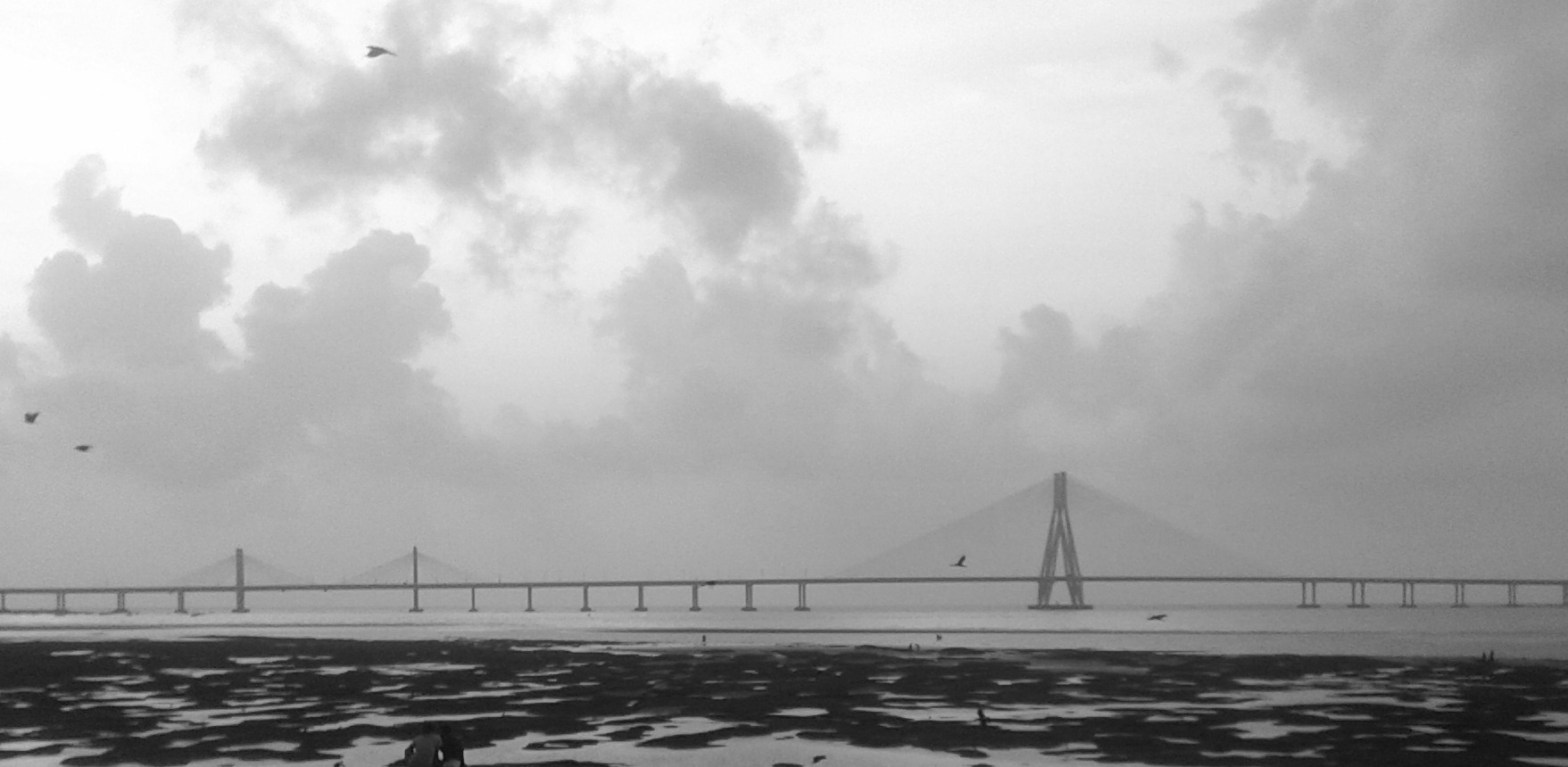
This photo belongs to Mumbai, to a Sunday afternoon, to Mona who was going out with someone new after having escaped the constant fury of a drunkard husband who used to beat everything out of her.
Pulp Mona.

This photo belongs to Mona’s mother, Doulab, who cleaned houses while looking for the real ‘suitable boy’, rebuilding Mona’s confidence and trust in humanity, who introduced us to Mona and her fiancé just there, in front of the Arabian Sea.

This photo belongs to the same period and a note I recently found:
‘Saw the tea boy who brings tea to my office.
I realised I am seeing him growing and no matter how I treat him or try to protect him, he lost his youth running from office to office.
Sometimes I get stuck with my eyes on his shirt: I see it’s pressed, or handled with care.
I ask myself if his mum does it for him, to look tidy.
My heart aches.’

This photo belongs to the mothers who jump into the impossible and do the triple somersault to hold the sky.
And their heart.
And the sea.
The whole lot.

This photo belongs to those who still care.
Just there, in front of all the seas, all hearts.


Kisses to the wind

nothing you would take
everything you gave
hold me till I die
meet you on the other side

Pearl Jam

Victor

When they came to the village, I was no more than a baby.Before I could learn my own vernacular language and to worship our Gods residing on the mountains, before I could learn to walk among my people, my widowed father decided to give me, as a present, to a white couple visiting.

My memories start with them, the two intellectuals who brought me to the city.
I became officially Venezuelan with a name chosen randomly as the couple were jealous of theirs. The late registration implies no one really knew my age.
The moment I could walk, I jumped into adulthood, adjusting to barely saying the necessary and working constantly more. Always more.
The couple became my Mamaita and Papaito by name, but I know they only saw me as the helper, the hardworking boy who took care of their grandchildren around the house.
By law of enlarged families, I became everyone’s Uncle Victor, the quiet and always stealthy, physically strong, stoic boy juggling between buckets and brooms, asking for permission to enter the house, having food alone, sleeping in a room outside.
I soon learnt that between a slave and a helper, the line was too thin to make a difference and that I was not included in Mamaita and Papaito’s seven children: I would never be the eighth, no matter how hard I tried.
Mamaita was strict. She took care of everyone’s education, while Papaito ran a leather and wood chair factory, plus the farm. I broke my back in both places.
Years rolled fast and, after graduating, everyone left while I continued to stay, working.
Even Albania, the artist studying medicine in another city, left for good, never becoming a doctor. She had always been an artist.
When Albania moved to Miami, she started sending me some money but nothing could compensate the void.


Lilia
The youngest sibling of my mother was the youngest aunt, Albania.
She was a painter with a pure soul; the only one who treated Uncle Victor with a sisterly love.
When my grandmother died I saw Victor cry endlessly: I understood he truly considered her as his mother. He left the house because my grandfather closed his heart and doors to him.
When I grew up, gone my grandparents, alone I set a goal: to buy the huge old house where we once resided and look for my uncle Victor to return the house he worked so hard for, to him.
Years passed, but I succeeded. I found him and struggled to convince him: he was very hurt, resentful. He had been hiding: it took me five years to find him.
I brought him with me, built a small apartment room and he lived with my children and myself until he died over a year ago.
One day that strong and grateful man whose skin hid age and endeavors, fell sick.
Health issues in my country are harrowing, I never knew for sure what my uncle had, but I assumed it was stomach cancer.
Vìctor was not treated in hospital because there were no supplies and I did not have resources to take him to a private clinic. I took care of him every night of pain, I became his nurse for several months, I attended his humble requests, I bathed him, injected him with pain killers, did my best to halt the bleeding. It was difficult, but I learned many things from him. He never lost his connection with the earth, nature; stray dogs came
every day to visit him because he brought them food from somewhere where he worked. When he was healthy enough, he met them at 5 pm while the dogs were already waiting for him. He talked to them, gave them names and food, while cats joined.
One day while he was in excruciating pain, he told me: Nena, (he used to call me Nena, Baby) teach me to pray, and I taught him to talk with God and the universe, which is the same for me. I took him to the patio and sat him on a chair among the trees. I bathed him and his innocent gaze was lost among the clouds and the sound of the birds, I know he enjoyed it. I also knew he was leaving. He would put his feet on the soil to feel the
connection and neither of us talked much. We just understood each other. He was in so much pain he asked me to pass ice to calm him down and I did.
Those were difficult months but they came with learning; I have never been so close to a person as pure as my uncle.
Due to my autoimmune condition I cannot enter hospitals, however I had to leave him there one day when illness was winning over him: he had a hemorrhage that with my precarious knowledge I could not stop.
He died alone, without me, that was the most painful part, but he and I had already talked about what was coming, I had explained how to surrender to the universe when the time came.
With a lot of effort I sent a funeral team to look for his body, I sent him to cremation and scattered his ashes in a small and beautiful spring.
I went with my children and said goodbye to him; when we threw his ashes and watched as the current carried them with it, I felt he was finally where he wanted to be, between trees and water, between birds and butterflies, free.
My uncle had never tasted freedom: he had been a slave, ripped from the jungle.
Now, whenever I go to the little stream where his ashes were scattered, butterflies chase me and land on me; my daughter says that it is the soul of my grateful uncle.
I am grateful for all the time that I was able to be near him.


Albania
I was born an artist, however my grandmother forced me to study medicine. I left university on my last semester, causing havoc.
I had a girl while still single: in those years and in a wealthy family, it was pure shame.
Victor would have done anything for my little, frail Brenda.
When I left Venezuela, I pursued my dream of becoming and artist and even if I only had 20 extra dollars, I sent them to Victor.
I was the only person to have ever hugged him, my elusive Victor.
The only person who has ever written him a letter, before I took my own life.

Lilia
Albania always loved him.
One day, enraged, Victor told me that if Albania loved him so much why she took her life, leaving him even more alone.
The day I took him to hospital, he carried a small bag with his few belongings. He knew in our hospitals patients are constantly being robbed, but he did not care. When he died everything was stolen, including the letter that was in his pocket.
Víctor reached Albania knowing her letter by heart.

I still go to the water stream and look at the butterflies, each carrying words of love.

‘Victor: my brother, my blood, my memory.
Your name stands for victory, over love and innocence. When you were little, you were extirpated from your land, from your Indian roots, from your Pemon origins, to become my little brother.
Maybe you carry a vague memory of your brief childhood… and your shyness
does not allow you to say anything; how it pains me that thousands of km and miles separate us, but I remember with a special love your scanty way of speaking trying to put a serious tone to life’s simple things, doing hard work and light chores that no one ever valued and which fell into oblivion… but you were diligent to orders which you always fulfilled without delay or mistakes, who knows, maybe in exchange of a smile.
You kept sadness to yourself and shared your happiness with a land where you did not belong.

Wherever you may want to be, may God bless you and I blow a thousand kisses to the wind as in an Indian ritual so that they travel through distance and land on your cheeks, to make your eyes shine and smile knowing that it was a message from your sister from your blood. I remember you …I remember … Albania”

photo

Lilia Josefina Guanipa Cordero is a Venezuelan mother of three, a story teller, a fighter, a feminist and a compassionate soul. Not necessarily in that order, abosolutely not only this.
She is a friend who received me. And that will always come first.